
Sunday night, eight Senate Democrats broke ranks to reopen the government after a 40-day shutdown. They’d held the line through fourteen votes, secured important wins—SNAP funding, federal worker protections, reversal of Trump’s mass firings—and then accepted a promise instead of a guarantee on healthcare subsidies for 20 million Americans, including me.
My heart broke. Because I know they were capable of more.
Here’s what most people don’t understand: there are no surprise outcomes with a caucus, only calculated outcomes. Leaders know the vote before they call it. Chuck Schumer made a calculation, eight senators agreed to take the heat, and everyone played their assigned role. That doesn’t mean it didn’t break my heart.
The Inverted Pyramid
At the local level, parties often are the fighters. City council members know their constituents by name and actually show up to town halls. They will see you in the grocery store, at church, at school functions—they are going to be confronted when they slip their commitments. This accountability makes local politics work.
But the larger the span of control, the more attractive politicians become to those seeking unfair advantage, and the less likely they are to be cornered at the grocery store. The numbers tell the story: party leadership recommends 30 hours per week fundraising, 3-4 hours per day on legislative work, all focused on the 0.29% of Americans who contribute more than $200 to campaigns.
When you spend 30 hours weekly calling that tiny fraction, you become excellent at calculating political outcomes and terrible at recognizing moments that require principle over comfort. The seduction is gradual—small tradeoffs “for the greater good” become big tradeoffs for power’s privileges. Former Rep. Jolly called the party fundraising operations “cult-like boiler rooms” with donation scoreboards shaming low performers. By the time you’re calculating which senators take the heat for a predetermined compromise, you don’t recognize how far you’ve drifted.
My Journey
My first election was Reagan’s second term. I grew up in a conservative military family who didn’t see the irony in voting against the programs that they depended upon for their educations. This was an early lesson in the complexity of motivation. My parents were smart, strong, and informed. I wish I could go back and learn more about how they saw the world.
They voted Republican, my brother and I voted Mondale. We all went together in the same car knowing we were going to cancel out each other’s votes.
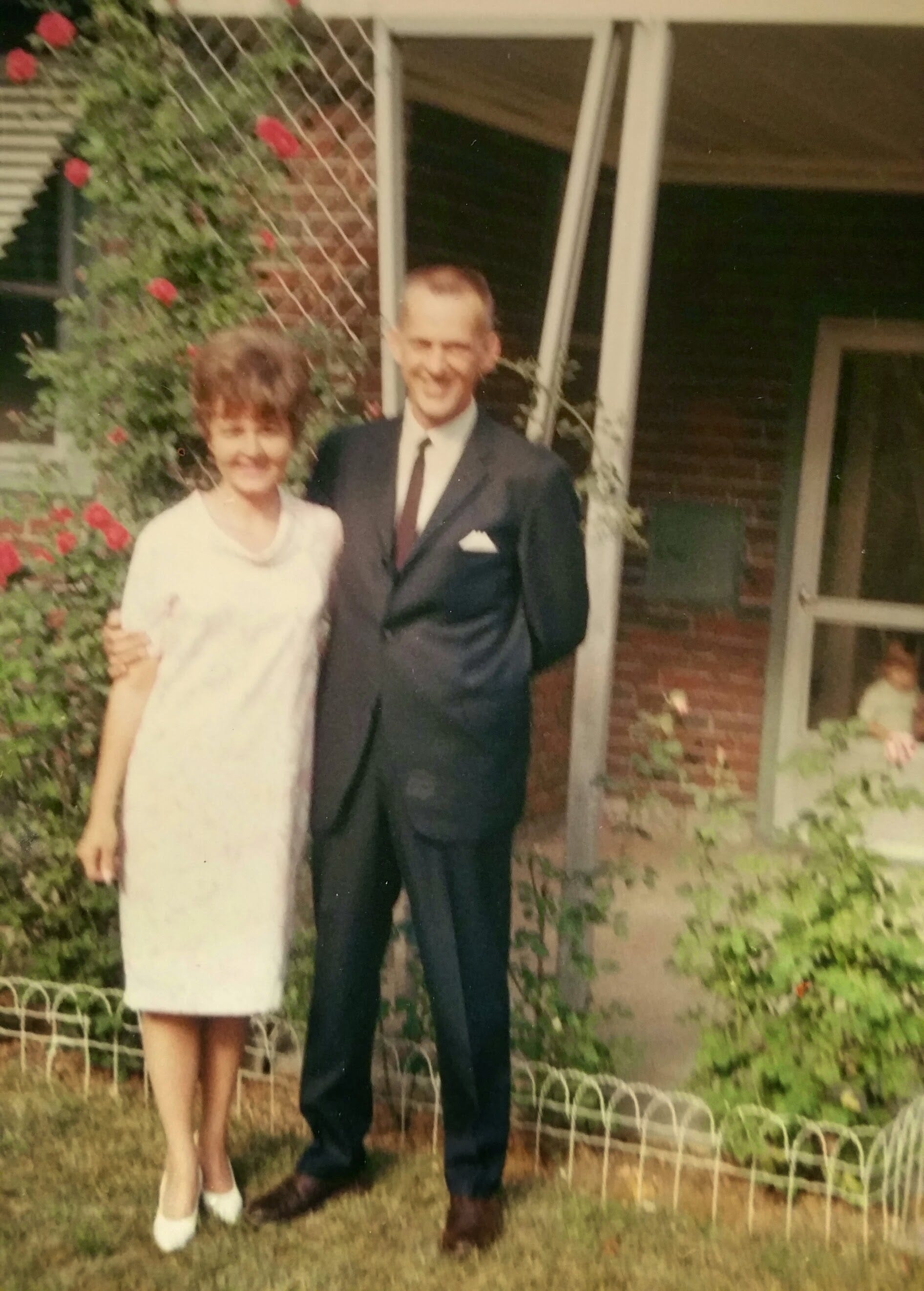
I was a 70s kid, a little girl who came of age in the ERA fight, which is also work that is unfinished. That meant I felt excluded from the vision of a Father-Knows-Best version of the American Dream. At the same time, I watched good people at local levels move up and slowly change—small compromises becoming big ones, donor access becoming expected, caucus calculations becoming standard.
2016 crystallized something for me when Wasserman Schultz abused her DNC chair role, revealing that committee leadership isn’t about representing people—it’s about managing outcomes from the pyramid’s top. Sunday night again confirmed the pattern.
That’s when I started calling myself a grassroots progressive.
Beyond Labels
I’m not a Democrat or Republican. I’m not a socialist or capitalist. And I’m not an Independent—that term means “not part of something,” but I am part of my community. That’s the whole point.
Instead, I believe in the right tool for the job. Healthcare for profit is immoral—it incentivizes denying care, making people sicker, pricing treatment based on desperation not need. When your child is dying, you’ll pay anything. That’s extortion, not a market.
We don’t run fire departments for profit because life-and-death emergencies where seconds matter shouldn’t operate on profit motives. Healthcare deserves the same obvious answer.
Public goods that need more investment than profit provides—research, national defense, mental health, the prison system, poverty safety nets—are shared investments in our collective quality of life. They’re the foundation that makes everything else work.
Capitalism excels at innovation, distribution, efficiency, and profit. Sometimes you need a hammer, sometimes you need a saw. Some see the world as a nail, some as an overgrown tree. We have both. We need different tools based on the need, not ideological alignment.
National party machinery traps you in ideological boxes because ideology fundraises better than nuance. At the local level, people are pragmatic—they ask what works.
What Grassroots Progressive Means
Grassroots progressive can be an AND label, or a label for those who feel they are without party. You can be a grassroots progressive and a Democrat. You can be a grassroots progressive and a Republican. You can be a grassroots progressive, period. It’s about how you engage, not which box you check.
Progressive means evolution toward a more perfect union—the words from our Constitution. Not regressive retreat to a time that no longer serves our society, but forward movement adapting to current reality while holding to foundational principles.
Am I advocating leaving party affiliation? No. Align yourself to where you are going to be inspired. Part of that is understanding why parties will break your heart sometimes.
A grassroots progressive is first and foremost an activist. They activate. They speak up, show up, and stay visible—in the street, in the voting booth, at town halls, in organizations. Visibility is the point.
This means active participation at the level where democracy actually functions—where representatives know constituents by name, where pragmatism beats ideology, where you can’t hide behind donor call time or caucus math, where you will be confronted at the grocery store if you slip your commitments.
I support local parties when they’re actually fighting—city council candidates, county organizers, state representatives using whatever tool solves the problem. At the national level, I fund organizations doing actual work: the ACLU and Southern Poverty Law Center defending the rule of law in courtrooms, Marc Elias winning voter rights cases, the Small Business Council of America lobbying for healthcare as a human right.
Why This Matters
Grassroots pressure works. Democrats respond to it. Republicans respond to it... eventually.
Look at Zohran Mamdani in New York—he’s a problem for establishment machinery not because of his policies but his approach. He was on the streets, not romancing the wealthy. He built power from the bottom up, stayed visible, activated his community, and won. When representatives are confronted at the grocery store, when they can’t hide behind caucus calculations, the whole inverted pyramid becomes unstable.
That’s why they publicly attack grassroots solutions while really trying to kill the approach itself. Because if this model spreads, their carefully calculated power games become impossible.
The trend is already building from the bottom up—in communities where activists activate, where visibility became 7 million strong for a day, where people use the right tools and keep showing up to improve the quality of all life. The top of the pyramid will eventually have to follow. Or fall.
The Work
Labels don’t fit the complexity of a person’s life. Democrat, Republican, Independent, Socialist, Capitalist—these are just organizing shorthand, not reliable identity markers.
Those of us—all of us—who believe in the words in the Constitution must not let up. Lean in and keep leaning in. We are focused on the rule of law, free and fair elections, access to healthcare, protections for the vulnerable, free and fair markets globally, educating our children, and trusted partnership with our democratic allies.
Wins are wins. Losses are losses. Sunday night was both. But the cause is the purpose, and passion is the energy that will get us there.
Show up. Speak up. Be visible. Fund the fighters, not the fundraisers. Work at the local level where accountability is real. Use the right tool for the job. Confront your representatives at the grocery store when they slip their commitments.
Not through labels. Not through ideological purity. Not through party loyalty. Through activation. Through visibility. Through the sustained, passionate work of building democracy from the bottom up.
That’s the work.
Democracy Spark provides ghostwriting for grassroots democracy organizations. You have the passion and vision, I have the words that move people to action. Let’s collaborate to bring our democracy back for the next generation.